
Gojira & Godzilla: Legends of Japanese Special Effects Makeup and My Childhood Hero.
Updated: Jan 14
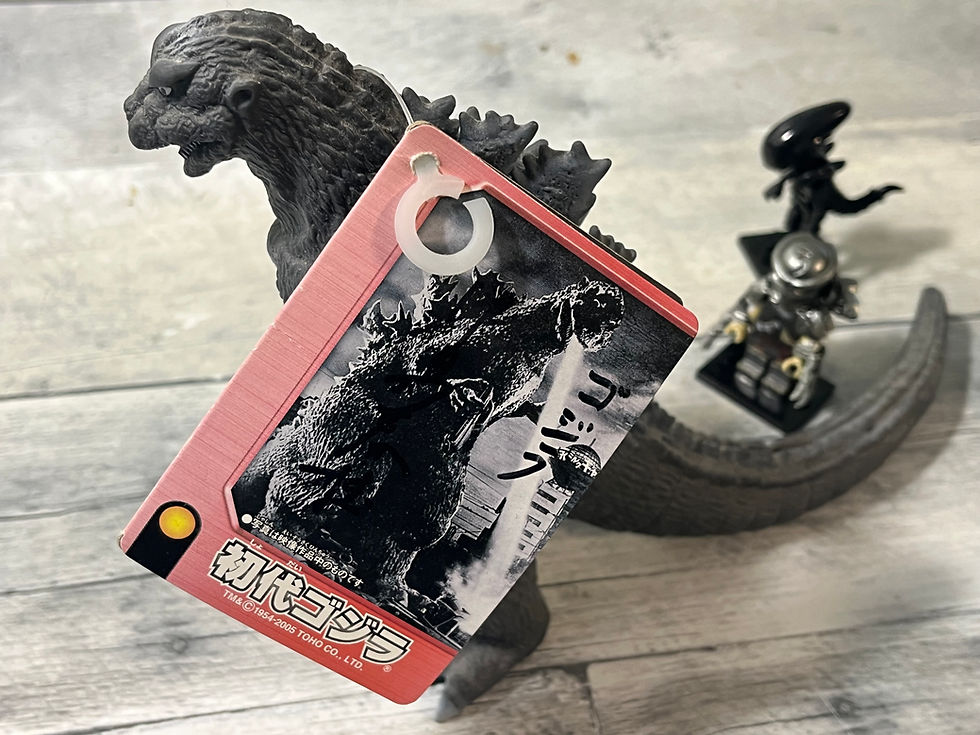
The theme song... as soon as I hear it with the famous roar! What a goosebumps moment. Many childhood memories come up with the song. Even when Hideki Matsui showed up for his baseball game in Angels, I have the same excitement. His nickname is Gojira. Japanese special effects makeup has a rich history that reflects the country’s creativity, resourcefulness, and cultural storytelling. Few icons illustrate this evolution better than Gojira (AKA Godzilla), the legendary monster who first appeared on screen in 1954. Gojira’s creation and ongoing transformations reveal how special effects makeup in Japan has grown from simple techniques to complex artistry, influencing not only Japanese cinema but also global pop culture. Today, I would like to talk about my hero, Gojira.
The Birth of Gojira and Early Special Effects Makeup
Growing up in Japan, my main interest was all about Kaiju and monsters. Gojira emerged in a post-war Japan grappling with the trauma of nuclear devastation. The 1954 film Gojira introduced audiences to a giant, prehistoric sea monster awakened and mutated by nuclear radiation. The filmmakers faced a challenge: how to bring such a creature to life convincingly on screen with limited technology and budget.
The answer was suitmation, a technique where an actor wears a detailed monster suit. Eiji Tsuburaya, the special effects director, led the team that crafted the original Godzilla suit. Made from latex, resign, and other materials, the suit was bulky and heavy, weighing around 100 kilograms (220 pounds). Due to the restriction of the suit, Gojira's iconic slow, heavy walking style was developed. The actor inside, Haruo Nakajima, had to endure intense heat and limited mobility to bring Gojira’s movements to life.

Advancements in Materials and Techniques
As Gojira films continued through the 1960s and 1970s, the team developed new techniques to make the suit more believable and easy to use. The original heavy rubber suits gave way to lighter, more flexible foams and latex blends. These changes improved the actors' comfort and allowed for more dynamic performances. Also, new Kaiju were introduced, such as Mosura (Mothra), Radon (Rodan), King Gidora (Ghidrah), and Minira (Minilla).

Artists began incorporating airbrushing to add depth and realism to the suits for better texture and color, making Gojira appear more lifelike. The eyes, often made from glass or plastic, were painted with more detail to show emotion despite the suit’s limitations. Also, Gojira's famous atomic breath was created by airbrush!
In addition to suitmation, filmmakers experimented with animatronics, which controlled Gojira’s eyes, mouth, and claws, adding subtle movements that enhanced believability. I was lucky enough to visit Shinichi Wakasa's special effects studio back in 2012, and I was able to see the insides of Kaiju suits. There was much equipment for animatronics.

Gojira’s Influence on Japanese Special Effects Makeup
Gojira’s success inspired a generation of special effects artists in Japan (including myself! My nickname was Koji-ra, a temper-headed pre-teen kid who broke many toys with anger.) The techniques developed for the monster’s creation became foundational for other kaiju films and tokusatsu (special filming) productions. Shows like Ultraman and Kamen Rider borrowed suitmation and makeup methods, adapting them for television. My favorite was Ultraman Taro and Baltan Seijin. I put my baseball hat vertically and pretended that I was Ultraman. Later in Hollywood, Steve Wang, who created the Predator mask and suit, also directed the Hollywood version of Kamen Rider.

The emphasis on practical effects and detailed makeup work set Japanese productions apart from Hollywood, which often relied more heavily on stop-motion or early CGI. Japanese artists focused on tactile realism, making creatures feel tangible and present.
This legacy continues today, with modern Japanese filmmakers blending traditional makeup techniques with digital effects. The foundation laid by Gojira’s creators remains essential for creating believable monsters and characters.
Modern Interpretations and Innovations
The 21st century, especially after Jurassic Park, brought new challenges and opportunities for special effects makeup in Japan. Advances in CGI allowed filmmakers to create more complex and fluid monster designs. Hollywood began to use more CGI in movies and TV shows. However, many Japanese directors still value the authenticity of practical effects.
The 2016 Shin Gojira reboot used mainly CGI. Although the final cut had a computer-generated look, the original designs were created by the well-known sculptor Takayuki Takeya. The design featured multiple forms of Gojira, each with distinct textures and organic shapes. He created grotesque, mutated skin, emphasizing the horror aspect of the creature.
This collaboration highlighted how special effects makeup remains relevant by adapting to new technologies rather than being replaced.
Miniature Sets: We cannot forget well-made miniature sets for Kaiju movies. Detailed scale models of cities and landscapes interact with suits to create destruction scenes. Many cities that were destroyed by Gojira became tourists' favorite places after the movies came out.

Gojira’s Cultural Impact and Legacy
Gojira (Godzilla) is more than a movie monster; it is a symbol of Japan’s resilience and creativity. The special effects makeup that created Gojira helped establish a unique cinematic style that blends horror, science fiction, and social commentary.
The techniques pioneered in Godzilla films influenced not only Japanese media but also Hollywood productions. For example, the use of suitmation inspired creature effects in movies like Alien and Predator. (I also worked on AVP Requiem which featured both Aliens and Predators!!) The emphasis on practical effects remains a hallmark of quality monster movies worldwide. The most recent film, Predator: Badlands, also used predator suits created by Studio Gillis & Weta Workshop.

Now you know where my love for special effects makeup is coming from. Many Hollywood artists were inspired by Wolf Man, Dracula, Frankenstein, and others, but my main inspiration is Kaiju. Things are different now because of fast-paced technology changes; however, I still enjoy this industry as well as recent Gojira movies. Congratulations to the Godzilla Minus One VFX team for their Oscar!
For Gojira fans ...

Gozilla Fan 
Making of Godzilla Suits 
Gojira DVD
DISCLAIMER: Links included on this page might be affiliate links. If you purchase a product with the links that I provide, I may receive a small commission. There is no additional charge to you! Thank you for supporting me so I can continue to provide you with FREE content each week!


Comments